
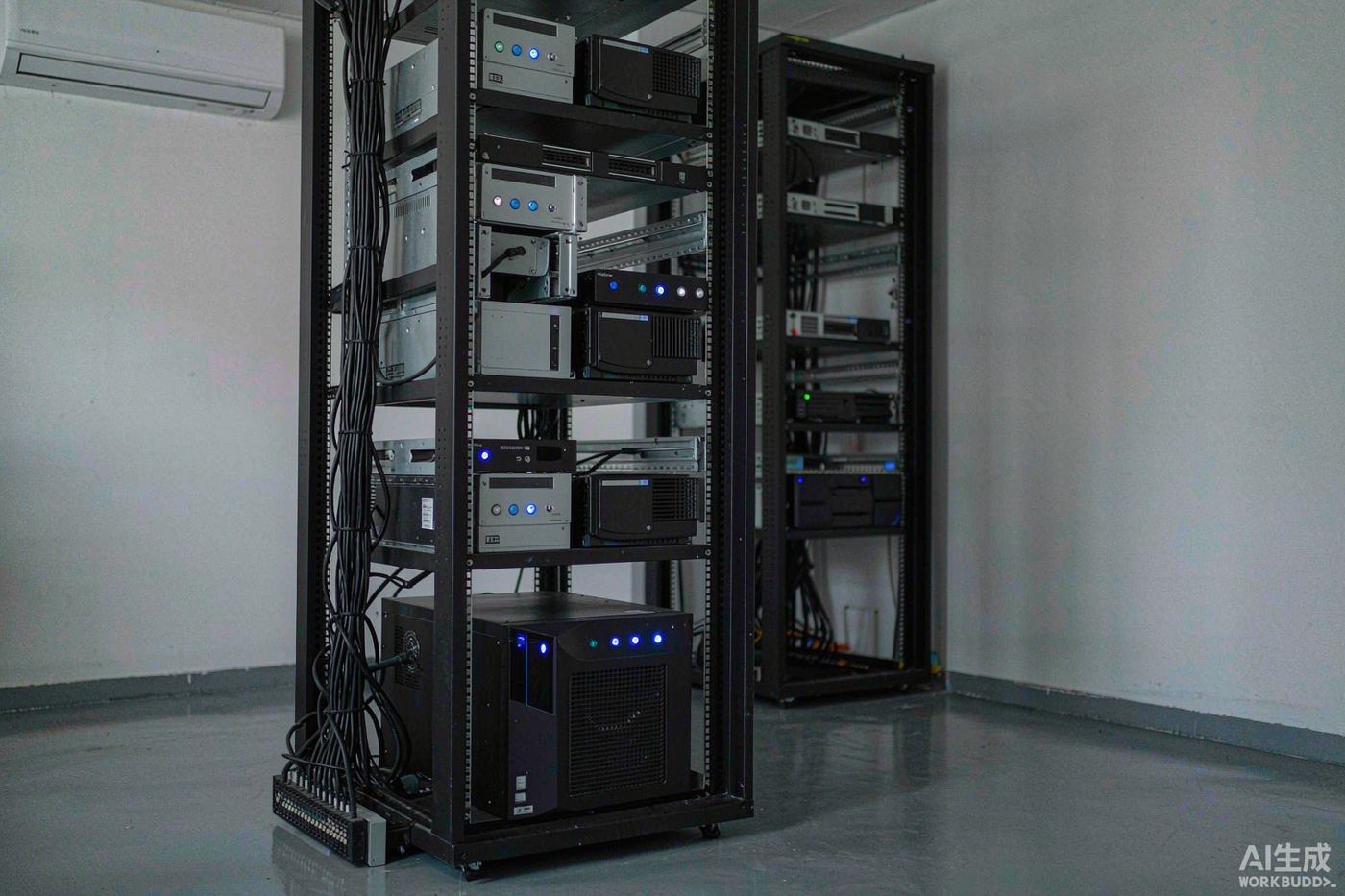
6 kVA server backup power with four LiFePO₄ packs
The server had been running straight off the mains until one brief outage interrupted a RAID check and forced a database rollback. This installation puts the UPS and its batteries in the same cabinet, with no extra floor space used.
The server had been connected directly to the mains, and one short outage was enough to show what that risks.
Configuration: 1 × 6 kVA online UPS + 4 × lithium iron phosphate (LiFePO₄) battery packs
The challenge
The server had been running straight off the mains, and a single brief outage interrupted a RAID verification and forced a database rollback — recovery took half a day. The equipment sits in a standard 42U cabinet with very little free space, and the customer did not want to give up floor space to a separate battery cabinet.
What we did
We specified a 6 kVA online UPS and four lithium iron phosphate (LiFePO₄) battery packs, all mounted inside the same cabinet. At the same usable capacity, lithium iron phosphate packs are noticeably smaller and lighter than lead-acid, so they fitted the space that was left in the rack and did not require the floor to be reinforced. A monitoring link was also run, so battery faults and power events raise an email alarm rather than being discovered after the fact.
The result
On a power cut the server now stays up long enough to complete a normal shutdown, and the file system errors have stopped. Everything was installed within the cabinet, so no additional floor space was taken.
If you are sizing backup for a rack or a small server room, contact us with your load list and required runtime.