
Rack-mount inverters
When runtime is measured in hours rather than minutes, a UPS plus a wall of batteries is the expensive answer — an inverter fed from a DC bank is the other one.
Series we supply1
| Series | Power | Type | Notes |
|---|---|---|---|
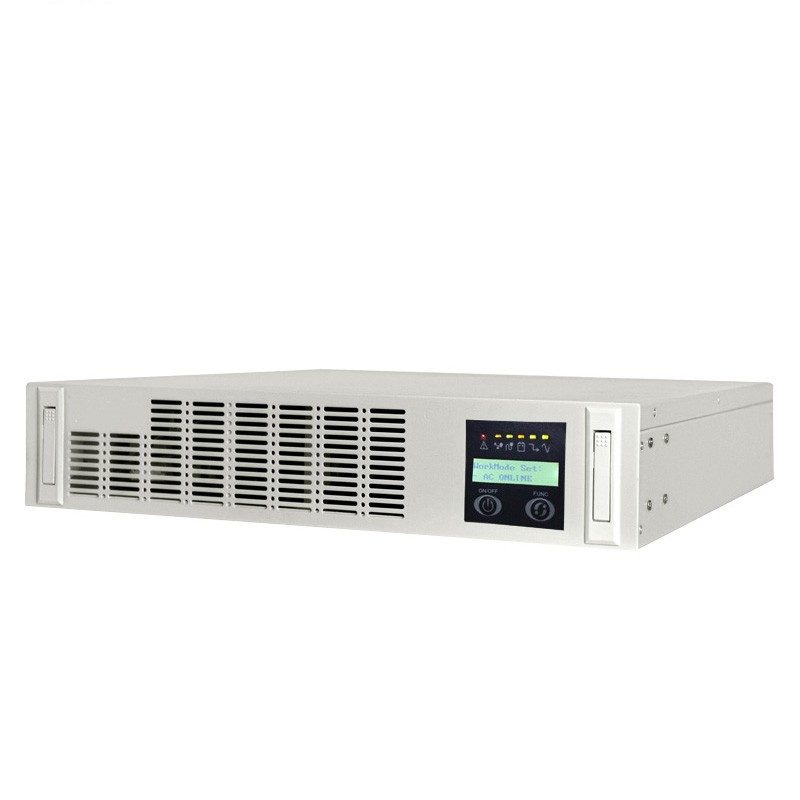 H1-10K H1-10K
|
10 kW class | Pure sine wave inverter, rack-mount | DC input 24 / 48 / 110 / 220 V, AC output 110 / 230 V; vehicle, off-grid and long runtime |
Linked series open a full page with the model list, ratings and downloadable datasheets. Models not listed can also be supplied. Capacity and battery sizing should be calculated by an engineer against the actual load — never from the nameplate rating alone.
Inverter or UPS — the division of labour
Both deliver AC when the mains is gone. The difference is the design intent:
| UPS | Inverter | |
|---|---|---|
| Main job | Take over seamlessly in milliseconds | Run continuously from a DC source |
| Typical runtime | Minutes to an hour, battery-limited | Hours to days, DC-source-limited |
| Typical DC source | Internal or external battery pack | Battery bank, solar, vehicle alternator |
| Where it fits | Server rooms, servers, sensitive equipment | Telecom rooms, vehicles, off-grid, solar |
Getting this wrong is common and expensive: buying a UPS plus a large battery wall for an eight-hour runtime produces a system that is bulky, heavy and poor value. That job belongs to an inverter with enough DC capacity behind it.
Why rack-mount
A 19-inch rack chassis is not cosmetic:
- It integrates with the existing cabinet — no separate box to find floor space for
- It can share the DC system already in the room — telecom rooms typically run a 48 V bank the inverter can draw from directly
- It scales by stacking — several smaller units, or zoned supplies, beat one oversized box for resilience
What we size before quoting
- Continuous and peak power. Two different numbers. Inrush on motor or compressor loads runs 3–7 times the continuous current — size on continuous alone and the unit trips on every start.
- DC input voltage. It must match the DC system on site (commonly 48 V). A mismatch means another battery bank and a completely different cost structure.
- Waveform. Pure sine wave, no exceptions. Modified-square-wave units are cheap and will not start some equipment, overheat transformers and buzz audibly — on medical, telecoms and control gear this is a requirement, not an upgrade.
Our H1-10K (DC 24/48/110/220 V input) is the rack unit we supply most often — its full specification is on the model list. Load sizing before quotation is free: send us the load list and we will size the whole DC-to-AC chain.
More in Inverters
Other options in the same category — comparing them side by side saves a round of questions.