
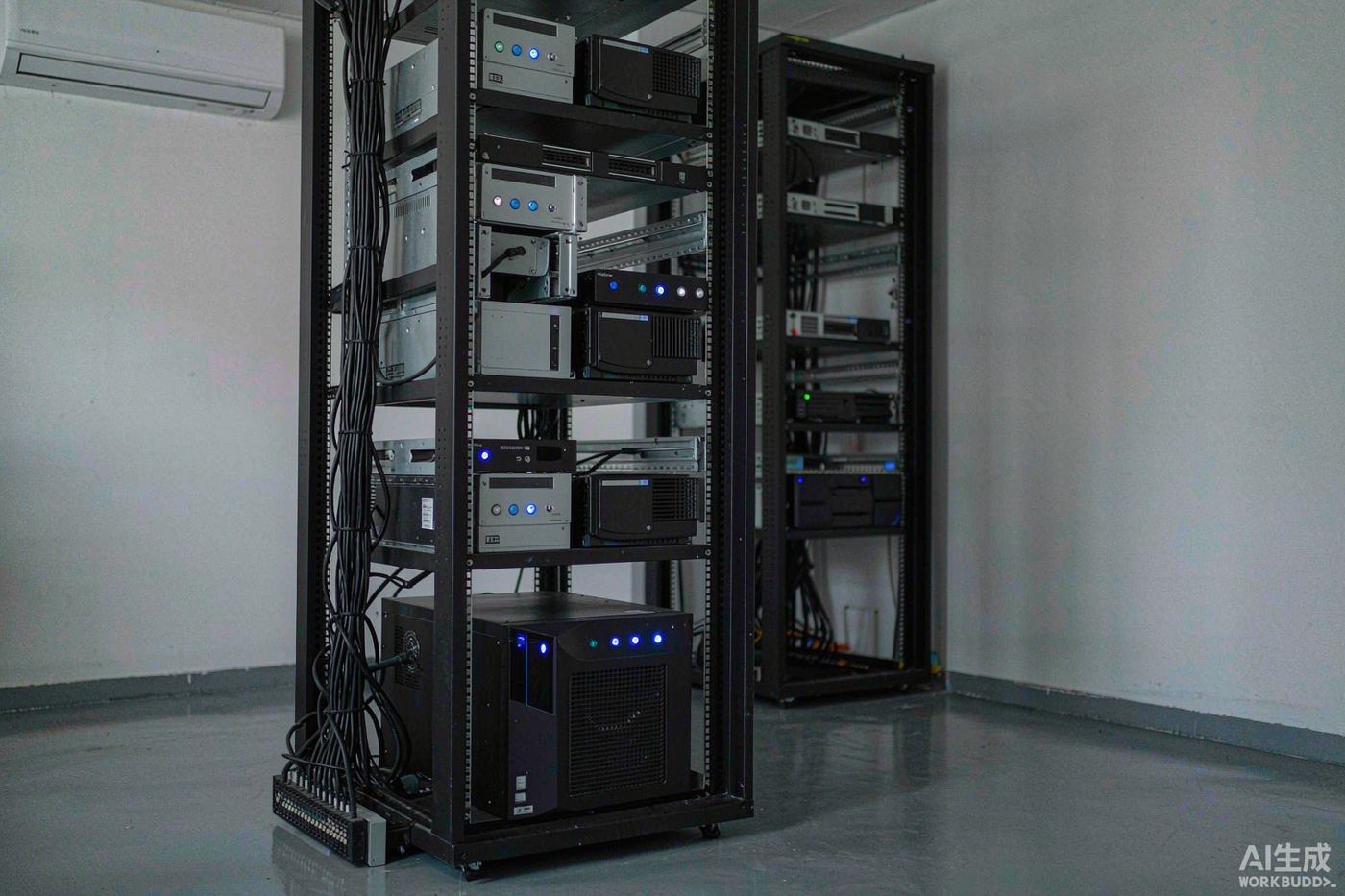
Data centres and server rooms
A power cut in a server room does not cost you a few minutes of downtime — it costs corrupted data, interrupted services and customers. Backup power has to be right on three counts at once: capacity, redundancy and runtime.
The real risk in a machine room
Equipment in a server room is far less tolerant of poor power than anything else on site: voltage sags shorten the life of power supply modules, a momentary break can trigger a RAID rebuild or corrupt a database, and a long outage stops the service outright. At the same time, a machine room is exactly where equipment density is highest, expansion is most frequent and cooling is under the most pressure.
The four questions we size against
- How much load is there, really? We measure server, storage and network equipment unit by unit — we do not add up the wattage printed on the power supply labels.
- How long must it run? Until the generator takes over (15–30 minutes), for the whole of a typical outage (1–4 hours), or just long enough to ride through a flicker? This single answer drives battery count and cost.
- Is redundancy needed? A single unit, parallel redundant (N+1), or dual bus? That depends on how long your business can tolerate an interruption.
- Is there space and floor loading for it? Rack space, floor loading and heat rejection often decide the design before budget does.
Typical configurations
- Rack-mount online UPS — for a single rack or a small machine room; compact to install, easy to expand
- Three-phase high-power systems — for medium and large rooms; high efficiency, parallel-redundant capable
- Lithium iron phosphate (LiFePO₄) packs — the first choice where rack space and floor loading are tight; noticeably smaller and lighter than lead-acid at the same capacity
- Distribution and bypass — so future maintenance and battery replacement need no shutdown. This is the part most machine rooms leave out at the start
Who we work with
SME server rooms, server racks, edge computing nodes, 5G sites, CDN nodes, disaster-recovery and backup rooms, and businesses currently relocating or expanding a machine room.
Where the equipment comes from
Most Hong Kong machine rooms we fit end up with EATON — rack-mount 9PX and DX for cabinet work, three-phase 93T and 93PM where the room is larger. The individual model numbers are on the full model list, and if the voltage, capacity or cabinet size you need does not exist as a standard model, our own factory line (THTAK) builds to specification — lithium UPS and rack inverters made in Shenzhen.
Contact us with your load list and required runtime, or message us on WhatsApp with a photo of the existing installation, and an engineer will work out the configuration.