
APC Smart-UPS RT / SRT external battery pack (192 V)
The right way to extend runtime: add the matching battery pack, rather than stringing together batteries of different specifications.
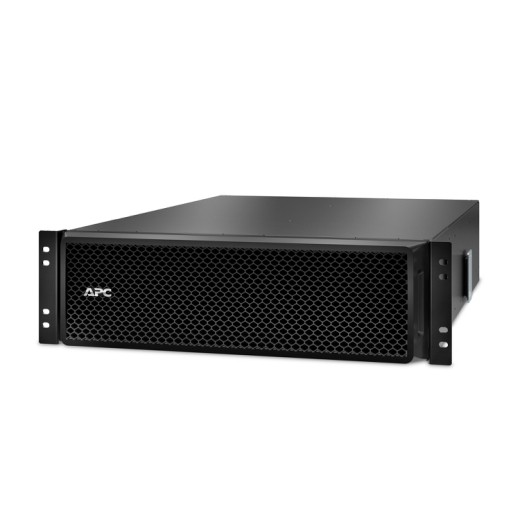 Product photo
- Brand
- APC (Schneider Electric)
- Type
- UPS external battery pack (rack-mount)
- Typical use
- Extending runtime on Smart-UPS RT / SRT models
- Models covered
- APC Smart-UPS RT 192 V rack battery pack (2 strings), APC Smart-UPS SRT 192 V 5 kVA / 6 kVA rack battery pack
- Category
- Batteries and battery packs / VRLA / AGM batteries
Extending runtime: three things to settle first
1. Is the bottleneck the host or the batteries?
Runtime = battery capacity ÷ load power. If the pack is four or five years old and the measured runtime is well below the original design, that is battery ageing — replace the string, and there is no need for a new UPS.
2. Is there a limit to how many packs you can add?
Yes. The host's charging capability and thermal design have limits. Over-stringing leads to undercharging, the batteries sit permanently below full, and ageing accelerates. How many packs is a question for the host specification — more is not better.
3. How much time do you actually need?
Waiting for a generator to start, or completing an orderly shutdown, does not take long. If the site has frequent long outages and no generator, the number to calculate is "through to restoration" or "through to someone arriving". Without a defined target, you are buying batteries by feel.
Our battery service
- On-site testing of the actual discharge capability of the existing pack — not just a voltage reading
- A specific recommendation: replace the string, or expand it
- Replacement work and disposal of the old batteries
- Measured runtime after replacement, with a test record on handover
- Optionally under an annual maintenance contract, tracking capacity fade over time
The battery is the only part of a UPS system that wears out. The unit itself can last ten years or more; the batteries face replacement every three to five. That budget should not be ignored, and it should not be handled the cheapest way possible.
Key features
- Manufacturer-matched specification, connecting directly to Smart-UPS RT / SRT hosts
- Rack-mount, so it sits in the same cabinet as the host
- Extends runtime on an existing UPS without replacing it
- Multiple packs can be connected for further runtime (subject to the host specification)
- We provide full-string replacement and capacity testing
Where it fits
An existing system short on runtime
The host is fine but the runtime is not. Adding a pack is far cheaper than replacing the UPS.
A room that has grown
More equipment has cut the runtime; add packs to bring it back to the design figure.
A pack reaching end of life
The original pack is close to its service life; replace the string and re-test the actual runtime.
Frequently asked questions
Why can't I replace just the failed block?
Will adding a pack double the runtime?
How do I confirm compatibility?
Related models & accessories
APC Back-UPS series
One of the most widely sold entry-level UPS families in the market. Many models, wide price spread — choosing the right model matters more than choosing the brand.
View detailsVRLA / AGM batteries
The economical workhorse of standby power — proven, sealed, maintenance-free, and fully compatible with existing UPS.
View detailsEATON 9PX series
The mainstream choice for server rooms: online double-conversion keeps the output fully isolated from the mains, with efficiency and serviceability at practical levels.
View detailsSpecifications
| Battery voltage | 192 V |
|---|---|
| Mounting | Rack-mount (RM) |
| Compatible hosts | APC Smart-UPS RT / SRT series — compatibility confirmed model by model |
| Battery type | Valve-regulated sealed lead-acid, to manufacturer specification |
| Expansion | Multiple packs can be chained, subject to the host specification |
| Replacement advice | Replace the whole string from the same batch; never mix old and new |
Specifications follow the manufacturer's latest data. Actual configuration must be sized against the site load, required runtime and distribution environment — this table is for selection reference only.