
EATON 93PX / 93PR three-phase modular UPS
The value of modular is not raw capacity — it is that a failed module does not stop you, and growth does not mean replacing the frame.
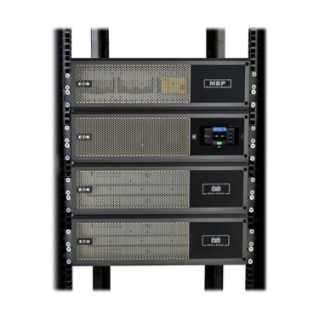 Product photo
- Brand
- EATON
- Type
- Three-phase modular online (large)
- Typical use
- Large data centres, critical infrastructure
- Models covered
- EATON 93PX series, EATON 93PR series
- Category
- UPS systems / EATON
What modular actually solves
A traditional high-power UPS carries three long-term problems:
- Capacity bought up front — but the business grows gradually, so the early years run at low load: poor efficiency, wasted energy.
- A fault means repairing the whole unit — long downtime, and spares at full-unit level.
- Expansion means replacement — equipment in good order scrapped because it is out of capacity.
Modular separates those three: the power modules set capacity, the frame sets the ceiling. Need more, add modules; a module fails, swap it on line — the load never notices.
What we ask before sizing
- What is the load today, and where will it be in three years? That sets the initial module count.
- What redundancy level? N+1 is the usual starting point; higher availability needs separate design work.
- Is there dual supply or a generator? It shapes the overall architecture and the runtime design.
- Floor loading and cooling? High-power equipment has definite requirements for floor loading and air-conditioning capacity; confirm them first.
- Who maintains it? With no on-site engineer, remote monitoring and alarming become mandatory rather than optional.
Quoting without settling these is guesswork. Our sequence is survey, then design, then price.
Key features
- Modular architecture — power modules are added as capacity demand grows
- On-line maintenance: a failed module is replaced without interrupting the load
- N+1 and higher redundancy configurations supported
- High operating efficiency, cutting long-run energy and cooling cost in a large room
- Integrates with machine-room monitoring, with SNMP and remote alarms
- Suits phased data-centre builds that expand with the business
Where it fits
A phased data centre
You do not have to buy full capacity on day one. Add modules as racks go live — easier on both capital and space.
A high-availability critical site
Needs N+1 or better, and needs maintenance to happen without dropping the load.
An energy-sensitive room
High efficiency cuts both the power bill and the cooling load — a visible difference over years of operation.
Frequently asked questions
Modular costs more than a monolithic unit — is it worth it?
Is running at low load really wasteful?
What are the lead times and the construction sequence?
Related models & accessories
EATON 93T series
Backbone power protection from machine rooms to production lines. At this level the UPS is the easy part — the design work is in distribution, cooling and runtime.
View detailsEATON 93PM series
One range, several voltage versions — which is exactly where specifying goes wrong. Confirm the site's input and output voltage before the order, not after delivery.
View detailsEATON 91PS / 93PS series
The useful middle ground between large single-phase and full modular — for a machine room that already has three-phase distribution but has not grown to data-centre scale.
View detailsSpecifications
| Capacity range | Large three-phase, set by module configuration and redundancy design (confirm with us) |
|---|---|
| Architecture | Three-phase modular online double-conversion |
| Redundancy | N+1 and above supported |
| Maintenance | Power modules replaced on line, load uninterrupted |
| Output waveform | Pure sine wave |
| Expansion | Add power modules; the frame stays |
| Typical sites | Large data centres, cloud rooms, critical infrastructure |
Specifications follow the manufacturer's latest data. Actual configuration must be sized against the site load, required runtime and distribution environment — this table is for selection reference only.