
ET1 series LiFePO4 online UPS
Swap a shelf of lead-acid blocks for one light, compact, long-lived lithium pack — built into the UPS rather than bolted on.
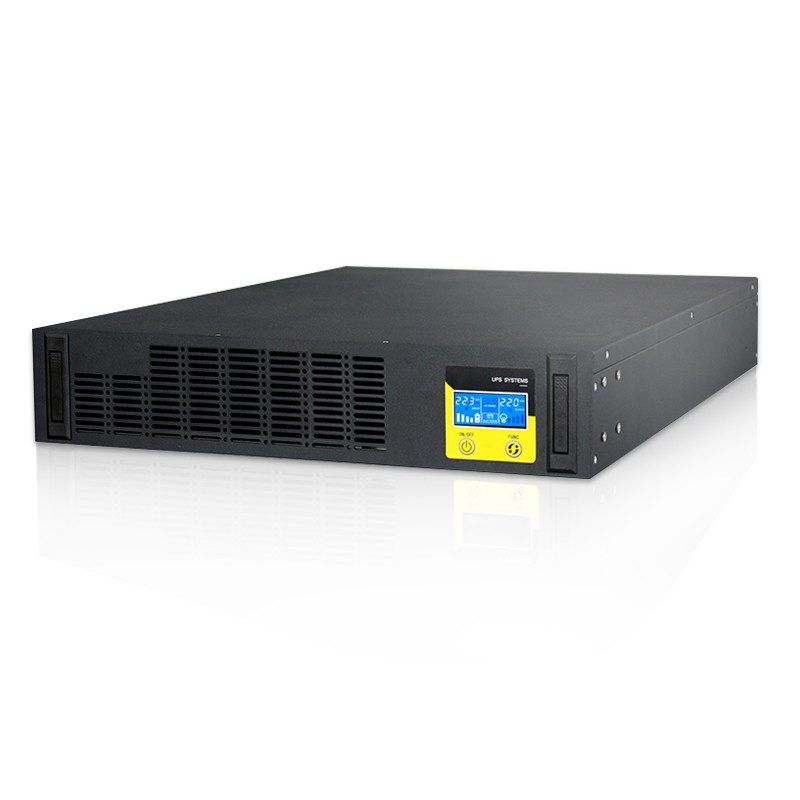 Product photo
- Brand
- THTAK (our own line)
- Type
- Online double-conversion (LiFePO4 battery)
- Typical use
- Machine rooms, vehicles, space-limited sites
- Models covered
- ET1-3KR rack-mount lithium online UPS, ET1-3KVA tower with built-in lithium, ET1-6KRS rack-mount with external lithium pack
- Category
- UPS systems / THTAK — our own product line
Designed as a lithium UPS, not converted to one
Lithium retrofits into lead-acid UPS frames are where most lithium projects go wrong — the charge profile is different and the BMS has to fight the charger. The ET1 is designed around LiFePO4 from the start: charger, BMS and pack are engineered together and shipped as one tested unit.
Where it earns its keep
The ET1 suits the jobs where lead-acid is most awkward: a cabinet with no spare U, a vehicle where every kilogram counts, or a warm room where lead-acid ages twice as fast as the datasheet promises.
Key features
- LiFePO4 chemistry — cycle life far beyond lead-acid
- Smaller and lighter at the same backup capacity — for space- and weight-limited sites
- Online double-conversion, output isolated from the mains
- Matched BMS with over-charge, over-discharge, over-temperature and short-circuit protection
- Rack and tower models for different install environments
- No watering or topping up — day-to-day, just watch the alarms
Where it fits
Tight rooms and cabinets
Lithium's size and weight fit where a battery room cannot be built or the cabinet is near its load limit.
Vehicles and mobile equipment
Less vehicle weight, tolerant of vibration and temperature swings — comms vehicles and conversions.
Hot environments
In warm equipment rooms, lithium tolerates heat and outlives lead-acid clearly.
Frequently asked questions
Why lithium in a UPS, rather than lead-acid?
Is the battery replaceable?
Related models & accessories
THTAK LT500–1500 series
Lithium batteries inside a line-interactive body — compact, maintenance-free, and no separate battery box to find room for.
View detailsEATON 9PX series
The mainstream choice for server rooms: online double-conversion keeps the output fully isolated from the mains, with efficiency and serviceability at practical levels.
View detailsDT1 / DT2 / DT3K series
Low-voltage output with lithium iron phosphate cells — for non-220 V environments where installation space and weight are constrained.
View detailsSpecifications
| Capacity | 3–6 kVA (by model) |
|---|---|
| Architecture | Online double-conversion |
| Battery type | LiFePO4 with BMS |
| Form factor | Rack (3KR / 6KRS) or tower (3KVA) |
| Output waveform | Pure sine wave |
| Runtime | By model and load — sized against the actual load |
| Charging | External battery pack supported on some models |
| Typical sites | Machine rooms, vehicles, tight equipment spaces, unmanned sites |
Specifications follow the manufacturer's latest data. Actual configuration must be sized against the site load, required runtime and distribution environment — this table is for selection reference only.