
C&D DNTY series batteries
A battery specification built for places that cannot go dark — a common choice in telecom and critical infrastructure.
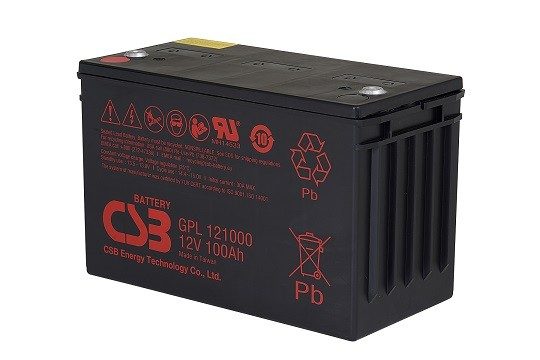 Product photo
- Brand
- C&D Technologies
- Type
- Valve-regulated lead-acid (telecom grade)
- Typical use
- Communications rooms, UPS systems, critical backup
- Models covered
- C&D DNTY series (12 V, by capacity)
- Category
- Batteries and battery packs / VRLA / AGM batteries
Three practical meanings of telecom grade
1. Consistency. Communications rooms often run several parallel strings. If blocks differ widely in resistance and capacity, charge and discharge become unbalanced, the weakest string fails first, and overall performance follows it down. Telecom-grade products hold that spread tighter at the factory.
2. Float life. The typical telecom and UPS regime is long float with occasional discharge — quite different from the daily cycling of a solar installation. Telecom-grade batteries are verified against that regime specifically.
3. Over-discharge tolerance. A site with an unsteady supply can discharge more deeply. Blocks with better tolerance are less likely to lose capacity permanently to sulphation under those conditions.
Testing saves more than replacing
Many clients only discover a failed battery after an outage. In fact most batteries give warning before they fail:
| Check | What it reveals |
|---|---|
| Terminal voltage | Abnormal charging, open circuit |
| Internal resistance | The earliest indicator of capacity fade |
| Actual discharge test | The real usable capacity |
| Visual inspection | Swelling, leakage, corroded terminals |
We recommend a full set of checks once a year, with the figures recorded. With trend data you can schedule replacement before capacity reaches a critical level — turning emergency call-outs into planned maintenance, at far lower cost and risk.
Our service
String sizing, installation and replacement work, annual testing (terminal voltage, internal resistance, discharge), old battery collection, and records with trend tracking. If you run several sites, we can supply one standard test sheet and report format so battery health can be compared across them.
Key features
- Telecom-grade design, with emphasis on batch consistency and long-term reliability
- Valve-regulated (VRLA), maintenance-free
- Suited to long float duty, the typical telecom and UPS operating regime
- Better tolerance of over-discharge, for sites with an unsteady supply
- For communications rooms, DC power systems and critical backup
Where it fits
Communications rooms and base stations
A typical float regime, needing long-term stability and batch consistency.
Critical infrastructure backup
Where downtime is expensive and reliability comes before price.
Sites with an unsteady supply
Better over-discharge tolerance absorbs more frequent deep discharges.
Frequently asked questions
How does a telecom-grade battery differ from a standard one?
Do you provide testing?
Why replace the whole string?
Related models & accessories
C&D LBTY series
The value of a long-life specification is not on the datasheet — it is in the answer to how many times you replace it in ten years.
View detailsCSB GPL series
A long-life specification built for machine-room UPS strings — the difference is not at the start, it is whether you replace them again a few years later.
View detailsLEOCH DJM series
The step from small standby power into medium systems — more capacity, and floor loading and cooling start to matter.
View detailsSpecifications
| Voltage | 12 V (per block) |
|---|---|
| Capacity range | By model — confirm with us |
| Type | Valve-regulated lead-acid (telecom-grade AGM) |
| Design life | Around 8–10 years on float in good conditions |
| Maintenance | No topping up; check terminal voltage and internal resistance annually |
| Installation | Confirm rack loading, cooling clearance and cable routing |
| Typical equipment | Communications rooms, DC power, UPS, critical backup systems |
Specifications follow the manufacturer's latest data. Actual configuration must be sized against the site load, required runtime and distribution environment — this table is for selection reference only.