
CSB GPL series long-life batteries
A long-life specification built for machine-room UPS strings — the difference is not at the start, it is whether you replace them again a few years later.
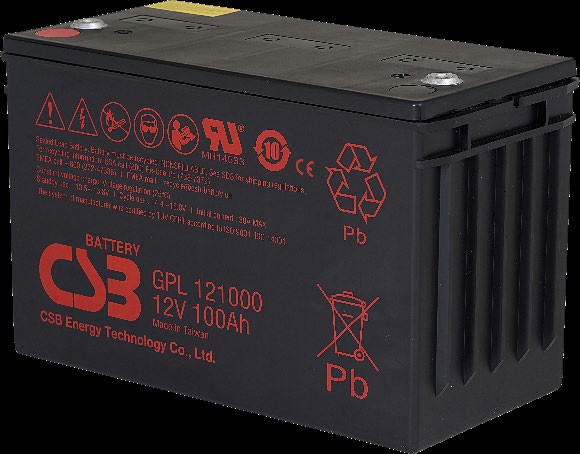 Product photo
- Brand
- CSB Battery
- Type
- Valve-regulated lead-acid (long-life AGM)
- Typical use
- Machine-room UPS strings, extended-runtime systems
- Models covered
- CSB GPL121000 (12 V 100 Ah), CSB GPL series, other capacities by model
- Category
- Batteries and battery packs / VRLA / AGM batteries
Doing the whole sum
Most people compare unit prices. The real cost looks like this:
Total cost = battery price x number of replacements
           + cost of each replacement (shutdown, labour, disposal) x number of replacements
           + business loss from downtime (if any)
For example: a standard AGM lasting 4 years against a long-life one lasting 8. Over ten years the first needs 2–3 replacements and the second needs one. If each replacement carries real cost — a shutdown window, people and a vehicle, handling the old batteries — the price difference is usually recovered by the second replacement.
Conversely: if the room runs hot and the batteries would not last three years anyway, money spent on cooling does more than money spent on better batteries. Temperature is the single biggest factor in lead-acid life; until that is addressed, no battery choice makes much difference.
What to confirm at the same time
- System voltage (set by the UPS): 12 V, 24 V, 48 V, 192 V and so on
- Target runtime: work back to the capacity needed — not simply the largest available
- Number of blocks and their location: the count sets the weight and the footprint
- Loading and cooling: the cabinet shelf or battery rack has to carry it, with ventilation clearance
- Cabling: conductor size, terminals, torque
- Monitoring: whether it is integrated into UPS monitoring or measured separately
What we provide
Sizing, installation including a loading and cooling assessment, full-string replacement, old battery collection, and a measured discharge test with a record on delivery. This can sit under an annual maintenance contract that tracks battery health and flags replacement before capacity falls too far.
Key features
- Long-life design; float service life longer than a standard AGM
- Thicker plates and a special alloy slow corrosion and capacity fade
- For machine-room strings where the replacement interval should be long
- Valve-regulated and maintenance-free, suitable for equipment rooms and cabinets
- Suits extended runtime and recovery after a deep discharge
Where it fits
Machine-room UPS strings
Systems needing longer runtime, built from multiple blocks into the matching voltage and capacity.
Sites where replacement is costly
Where a shutdown or awkward access is involved, long life means fewer replacements.
Extended-runtime systems
Where longer discharge times are needed, and both capacity and consistency matter.
Frequently asked questions
Are long-life batteries worth the extra?
How long will 100 Ah last?
How does this compare with OPzV gel?
Related models & accessories
CSB GP series
A standard battery specification for small UPS and security equipment. When replacing them, the thing that matters is not the brand — it is replacing the whole string.
View detailsLEOCH OPzV series
When replacing the battery costs more than the battery, the durable class starts to pay for itself.
View detailsAPC Smart-UPS RT / SRT external battery pack (192 V)
The right way to extend runtime: add the matching battery pack, rather than stringing together batteries of different specifications.
View detailsSpecifications
| Voltage | 12 V (per block) |
|---|---|
| Capacity | By model (for example 100 Ah) |
| Type | Valve-regulated lead-acid (long-life AGM) |
| Design life | Around 8–10 years on float in good conditions |
| Maintenance | No topping up; check terminal voltage and internal resistance annually |
| Installation | Confirm rack loading, cooling clearance and cable routing |
| Typical equipment | Machine-room UPS strings, telecom equipment, extended-runtime systems |
Specifications follow the manufacturer's latest data. Actual configuration must be sized against the site load, required runtime and distribution environment — this table is for selection reference only.