
LEOCH DJW series batteries
A general-purpose 12 V battery, and one of the most common specifications inside a cabinet UPS string.
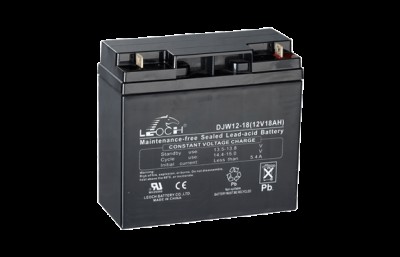 Product photo
- Brand
- LEOCH
- Type
- Valve-regulated lead-acid (AGM)
- Typical use
- UPS battery strings, telecom equipment, security systems
- Models covered
- LEOCH DJW series (12 V, by capacity)
- Category
- Batteries and battery packs / VRLA / AGM batteries
What matters when specifying a general-purpose battery
Specifications like the DJW look simple, but three decisions drive the result.
1. The voltage has to match the host. 12 V, 24 V, 36 V, 48 V, 192 V — different UPS models need different string voltages, and connecting the wrong one means it will not run, and may damage equipment. Confirm this before quoting.
2. Capacity comes back from the target runtime. It is not "bigger is better". More capacity means more volume, weight and cost, and if the host's charging capability is limited, an oversized string sits permanently undercharged.
3. Block count and floor space. Capacity sets the number of blocks; the count sets the space and the weight. Cabinet loading, shelf dimensions and cable routing all have to be confirmed together.
The budget question I get asked most
"Can we use cheaper batteries now and upgrade later?"
We do not recommend it, and not out of brand snobbery — mixing batches shortens the life of the whole string, which means paying the saving back at the next replacement. On top of that, battery replacement needs a shutdown or a bypass, and the labour cost of the work usually exceeds the price difference between the batteries themselves.
Doing it once, keeping the string consistent and recording the cycle is the cheapest route over time. It is also one of the things we track for clients under a maintenance contract.
Key features
- Valve-regulated (VRLA), maintenance-free, no topping up
- A range of capacities, so a string can be built to the runtime you need
- Designed for float duty — long standby with short discharges
- For UPS, telecom equipment, security and DC power systems
- Stable supply, available as a complete string
Where it fits
Cabinet UPS strings
Sized to the UPS model and the target runtime, built to the matching voltage and capacity.
Telecom standby
DC standby power for telecom equipment on long standby duty.
Security and surveillance
Keeps systems running through an outage.
Frequently asked questions
Can I mix brands at the same capacity?
How do I work out string voltage and capacity?
What happens if the equipment sits unused?
Related models & accessories
LEOCH DJ series (12 V AGM)
The battery type small equipment uses most. Compact and maintenance-free — but there is one rule that has to hold when you replace them.
View detailsLEOCH DJM series
The step from small standby power into medium systems — more capacity, and floor loading and cooling start to matter.
View detailsCSB GPL series
A long-life specification built for machine-room UPS strings — the difference is not at the start, it is whether you replace them again a few years later.
View detailsSpecifications
| Voltage | 12 V (per block) |
|---|---|
| Capacity range | By model — confirm with us |
| Type | Valve-regulated lead-acid (AGM) |
| Duty | Float (UPS standby) |
| Design life | Around 3–5 years on float, depending on conditions |
| Maintenance | No topping up; annual testing recommended |
| Typical equipment | UPS strings, telecom equipment, security systems, DC switchboards |
Specifications follow the manufacturer's latest data. Actual configuration must be sized against the site load, required runtime and distribution environment — this table is for selection reference only.